
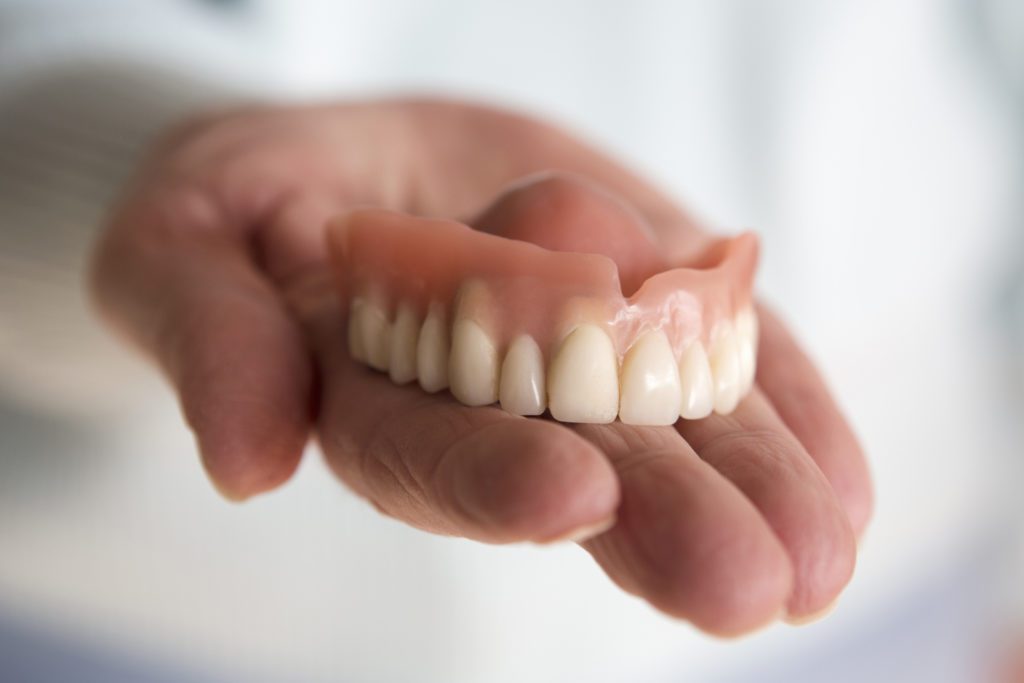
A denture is a popular dental restoration we use to replace lost teeth or whole arches of missing teeth. Our dentures will either rest on your gums or attach to dental implants. Most of them consist of acrylic and porcelain. We can provide several types of dentures including full dentures, partial dentures, and denture implants.
Dr. Nechama Brand is an experienced restorative dentist in downtown Chicago. When treating patients who suffer from damaged or missing teeth, our dentist recommends implant-secured dentures over removable dentures. When secured by dental implants, full dentures allow for a more secure fit and longer-lasting results. Our office also provides additional restorative dentistry treatments for new and existing patients.
Types of Dentures in Chicago
We offer several types of dentures in downtown Chicago. During a consultation, our dentist will determine which one you need. We base this decision on your individual situation. Then, the dentist creates a complete treatment plan for you based on your issues, wants, and budget. Here’s the types of dentures we can provide:
- Conventional/full dentures: These are removable teeth that the dentist can place after you lose or extract all your teeth and the gum tissue has healed. Most dental offices offer this traditional denture treatment.
- Immediate dentures: The dentist fabricates and immediately inserts them after a tooth extraction. The gum tissue underneath the denture will heal gradually as you wear the immediate restoration.
- Upper denture: Made of acrylic, an upper denture covers the top palate or the roof of the mouth.
- Lower denture: This type of denture replaces the bottom row of teeth. It looks like a horseshoe, so it has room for your tongue.
- Partial Dentures: These can replace a set of missing teeth, usually located next to each other. Partial dentures are for patients who still have many healthy teeth remaining.
- Denture Implants: Dental implants can secure a full denture on the upper or lower jaw. The dentist inserts the implant fixtures into the jawbone during a surgical procedure.
Making A Removable Denture
Removable dentures only require dental impressions before they are ready. We will take them during a quick dentist appointment and ship them to a reputable dental laboratory. It typically takes less than a month for us to receive the new denture.
Our dental team will make sure it fits properly and make adjustments if necessary. We will also give you advice on how to maintain your new fake teeth. Despite this quick treatment time, removable dentures require daily soaking and upkeep.
The Process of Adjusting to Your Denture
This is perhaps the most difficult part for our patients. Unfortunately, placing a foreign object in your mouth will be uncomfortable at first. For most denture wearers, it takes about a month to adjust to their dentures.
You have to wear it as much as possible so that you acclimate to eating and speaking with it on. This also reveals if the dentist needs to adjust it. If you develop a sore spot in your mouth where the denture is rubbing on your gums, please schedule a dental appointment. We will do our best to fix it as soon as possible.
The more you practice putting your denture in, the easier it will become. The muscles and ligaments in your mouth will begin to adjust, making it easier over time. We recommend cutting your food into small pieces to learn how to eat with your new dentures. Chew slowly and on both sides of your mouth.
At your visit, we will teach you which foods you can and cannot eat anymore. For example, you may need to eliminate sticky and hard foods from your diet.
Will I Need Adhesive?
Denture adhesive will simply help secure the denture even more. Some denture wearers assume that they should use it to hold old, ill-fitting false teeth in place. That is not true.
If they do not fit properly, they require maintenance or replacing. Regular maintenance is normal and you should not avoid it. So, your denture may need a reline or replacement altogether.
Using Dental Implants to Secure a Denture
Many patients struggle with traditional dentures because they slip and require messy adhesives. With implant dentures, patients can speak easily and eat the foods they love without restrictions. Patients also experience better bone retention with implant-secured dentures.
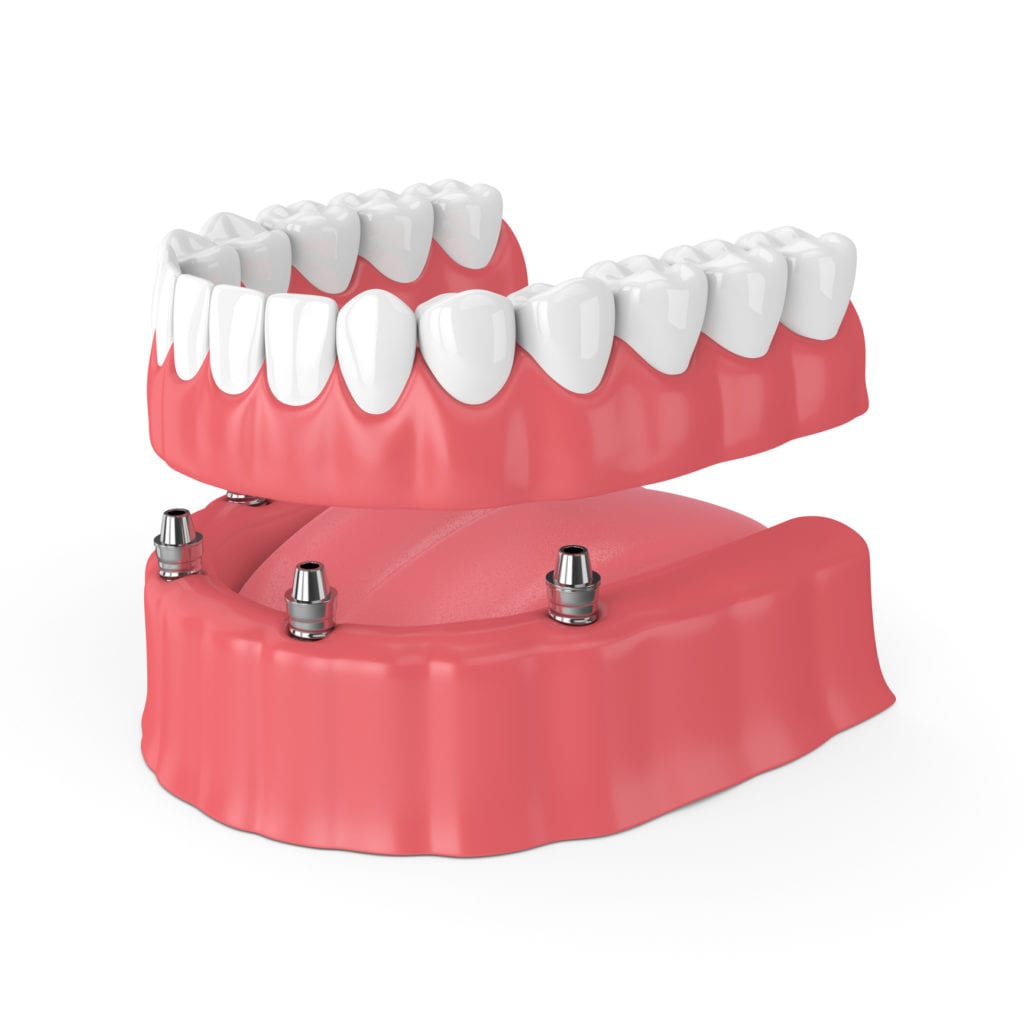
At Premier Dentistry, we recommend that patients choose implant-secured dentures when possible. They look and function like natural teeth and are the best way to replace an entire row of missing teeth. Not only is it better for your oral health, but it is also better for your quality of life.
However, the dental implant process is more expensive and will take longer. You will need surgery to insert the implant fixtures into the jaw bone. It also takes months of healing time, but in the end, you will have the next best thing to your real teeth.
To find out if you’re a candidate for an implant denture, Dr. Brand will do a complete evaluation of your oral health and medical history. You may require a bone graft to build up the bone density in your jaw. This will help with the success of the implant fixtures. It would be best if you were as healthy as possible for the success of your implants.
The Denture Implant Process
First, our oral surgeon will insert implant fixtures into your jaw. Then, we will let your mouth heal for a period of three to six months. The implants will permanently fuse with your jawbone. Following this period, we will take dental impressions or gather precise measurements.
The dental laboratory will make your denture with this information. Once the dental lab sends us your new denture, we will contact you to schedule your last appointment. The dentist will attach the denture to the implants and make final adjustments. Our staff will teach you how to take care of your new denture implant.
Why Choose Implant Dentures?
Permanent implant-secured dentures offer important benefits. Take the following into consideration when replacing a full arch of teeth:
- A stable bite: No more shifting or slipping dentures. Dental implants will hold your new smile in place.
- Healthier gum tissue: The gums and soft tissues will adapt to the fit of your new implant denture. You will experience minimal to no irritation with a secure new smile.
- Confident speech: With your new teeth held securely in place, you can speak clearly and confidently.
- Ability to enjoy a varied diet: Denture implants do not typically have diet restrictions since they function like natural teeth. You can eat a variety of healthy foods without worrying about your set of fake teeth slipping while chewing.
Patient Review
Frequently Asked Questions
We welcome you to read answers to common questions about dentures in Chicago, IL.
How often should dentures be relined or replaced?
Dentures typically need to be relined every 1 to 2 years to maintain a proper fit. Full replacements are usually needed every 5 to 7 years due to wear and changes in the shape of your gums and jawbone. Regular checkups help your dentist determine when adjustments or replacements are necessary.
How do I care for the gum tissue under my dentures?
You should remove your dentures nightly and gently brush or massage your gums with a soft toothbrush to stimulate circulation. Next, rinse them with warm salt water to reduce inflammation and promote healing of any sore spots. Keep your mouth clean and give your gums a break from denture pressure while you sleep. Regular denture adjustments prevent pressure sores that can develop into more serious tissue problems.
Will my facial appearance change if I don’t replace missing teeth with dentures?
Yes, not replacing missing teeth can lead to bone loss and sagging facial features over time. Without tooth support, your cheeks and lips may sink inward, making you appear older. Dentures help maintain facial structure and support the surrounding tissues.
What is the difference between an upper and lower denture in terms of fit?
Upper dentures typically have better suction and stability because they cover the roof of the mouth. Lower dentures tend to be less stable due to tongue movement and less surface area for suction. Implant-supported options can improve the fit and comfort of lower dentures.
Can I switch from traditional dentures to implant-supported ones later?
Yes, many patients transition from traditional to implant-supported dentures for improved stability and comfort. Your dentist will evaluate your bone health to determine if you’re a candidate for implants. In some cases, bone grafting may be needed before implant placement.
How long does it take to adjust to implant dentures?
Most patients adjust to implant dentures within a few weeks to a few months, but everyone’s experience is a little different. At first, your mouth and muscles need time to get used to the new feeling of the dentures. Even though implant dentures are more stable than traditional dentures, you still need time to get used to your new teeth.
During the first few weeks, you may notice mild soreness, pressure, or changes in how you speak or chew. This is normal and usually improves as your mouth heals and your confidence grows. We’ll recommend that you eat soft foods and follow our instructions to make the adjustment easier.
Request a Dental Care Exam Today
Premier Dentistry at Millennium Park is your downtown Chicago dental office for restorative dentistry. We replace missing teeth using the latest techniques and modern dental materials. When you are ready to make a change in your dental health, give us a call at 312-586-8596 today. Feel free to request an appointment online.